Every business owner eventually notices the same pattern: sales plateau, customer complaints creep up, and the team spends more time patching problems than serving customers. Often the real culprit isn’t the market or the competition, it’s the physical infrastructure quietly holding everything back. Aging equipment, outdated buildings, and worn-out systems don’t announce their limits with a warning light; they just slowly shrink what your business is capable of doing. Recognizing these hidden ceilings early can mean the difference between steady growth and years of frustrating stagnation.
Outdated Water Systems Drain Efficiency and Budget
Hot water demands rise as a business grows, whether it’s a restaurant kitchen, a gym with showers, or a manufacturing line that needs consistent temperatures for cleaning. An aging unit that struggles to keep up forces staff to wait, ration usage, or work around shortages, all of which cost real money in lost productivity. A ten-year-old tank designed for a smaller operation simply can’t deliver the recovery rate a busier location now needs, so the gap between demand and output only widens as the business expands. The warning signs are often easy to overlook until they become disruptive: lukewarm water at peak hours, longer recovery times between uses, rusty discoloration, or a spike in the gas or electric bill despite no change in usage. Each of these points to declining efficiency, meaning the unit is working harder and spending more energy to produce less hot water. Left unaddressed, that inefficiency compounds month after month, quietly eating into margins that could otherwise fund growth. Scheduling a professional water heater installation before the old unit fails completely gives you control over timing, budget, and capacity planning instead of reacting to an emergency shutdown. It also opens the door to right-sizing the system for current and near-future needs, whether that means upgrading tank capacity, switching to a tankless or hybrid model, or adding a second unit to handle peak-load redundancy. Planning the swap during a slow season or scheduled maintenance window, rather than after a burst tank floods a kitchen or locker room, protects both operations and the bottom line.
Beyond convenience, newer systems are often sized and engineered specifically for commercial loads, which reduces the risk of undersized equipment becoming next year’s bottleneck. A water heater or boiler installed a decade ago for a smaller operation may already be running at or near capacity, leaving no room to absorb a new production line, an added shift, or a facility expansion without triggering pressure drops, temperature inconsistencies, or recovery delays that slow everything downstream. Waiting until a unit dies completely almost always costs more, since emergency replacements rarely allow time to compare options or plan for future capacity needs. A planned upgrade might take weeks to evaluate vendors, right-size the system, and schedule installation around production; an emergency failure compresses that into days, often forcing you into whatever equipment is immediately available regardless of fit. That urgency premium shows up directly on the invoice. Rush orders, overtime labor, and off-the-shelf units that aren’t optimized for your load profile can easily add 20-30% to the total cost compared to a scheduled replacement, and that’s before accounting for the downtime racked up while operations wait on hot water, steam, or process cooling to come back online. There’s also a hidden opportunity cost worth flagging: a reactive replacement locks you into a like-for-like fix, while a planned upgrade lets you factor in future growth, tighter efficiency standards, or better monitoring capabilities. Skipping that evaluation window means potentially reinstalling the same capacity ceiling you just hit.
Roof Condition Determines How Much Space You Can Actually Use
A failing roof does more than leak during storms; it limits how a building can be used at all. Water intrusion damages inventory, ruins equipment, and can force entire sections of a facility offline while repairs happen, cutting directly into usable space and revenue. Business owners often delay addressing roofing issues because the damage isn’t visible from inside, until a ceiling stain or a mold smell forces the issue.
Bringing in experienced roofing contractors for a proactive inspection, rather than waiting for a visible failure, helps catch small issues like flashing gaps or worn membrane before they become structural. A roof in good condition also protects insulation performance, which affects energy bills and equipment lifespan indoors. Treating roof health as a growth issue, not just a maintenance line item, changes how owners prioritize the budget.
Worn Production Equipment Limits Output Before You Notice
In manufacturing and heavy industry, the tools that shape raw materials are often the least visible part of the operation to outsiders, yet they set the ceiling on what a company can produce. A stamping press that ran within a few thousandths of an inch tolerance when new can drift gradually over years of use, and nobody schedules downtime to check for a problem that isn’t triggering alarms. Consider grader blade manufacturing, where precision tooling directly affects how consistently a finished product performs in the field. A blade that’s ground even slightly out of spec may still pass a cursory inspection, but it wears unevenly once it hits the dirt, forcing the end customer to replace it sooner than expected. Equipment that has drifted out of tolerance due to age doesn’t always throw an error; it just produces slightly lower quality output that customers eventually notice and complain about. Hardness inconsistencies, uneven edge geometry, or slight warping can all originate from a heat-treat furnace or forming die that’s operating a few degrees or a few thousandths off its original calibration. By the time complaints roll in, the cost has already compounded: returns, warranty claims, and a reputation hit that’s harder to fix than the machine itself. Regular tolerance audits and calibration checks catch this drift long before it reaches the customer, but many operations only budget for repairs after a breakdown rather than for the slow, invisible slide in output quality.
Companies that track equipment performance against original specifications, rather than assuming “it still works” is good enough, catch these slow declines early. A stamping press rated for 40 cycles a minute that’s quietly running at 33 isn’t broken — it’s just costing you 17% of its output, every hour, without tripping any alarm. That gap rarely shows up on a maintenance report, because nothing has technically failed. Regular calibration checks are the first line of defense, since drift in tolerances often shows up as scrap or rework long before a machine stops running altogether. Tooling replacement schedules matter just as much: a worn die or dull cutting head can silently stretch cycle times by seconds per part, which adds up to hours of lost capacity across a full production run. Operator feedback is an underused resource here. The people running the equipment daily usually notice subtle changes — more frequent jams, unusual vibration, slower warm-up times — well before those issues appear in output data. Building a simple channel for that feedback, and actually acting on it, often surfaces capacity problems months before a formal audit would. Finally, comparing current throughput data against the equipment’s original commissioning benchmarks, not last year’s numbers, is what reveals the true size of the gap. Year-over-year comparisons can mask a slow bleed if the decline has been consistent and gradual. Measuring against the original baseline shows leadership exactly how much ceiling has been lost — and how much could be recovered.
Cluttered Job Sites Slow Down Every Project Timeline
Construction and renovation projects generate debris fast, and how that debris gets handled has a bigger impact on schedule than most people expect. Sites without a clear waste removal plan end up with crews stepping around clutter, safety hazards piling up, and inspectors flagging violations that halt work entirely. Renting roll off containers sized appropriately for the scope of a project keeps the site organized and keeps labor focused on the actual work instead of manual debris hauling.
Poor site organization compounds over time, since delays on one phase push back every dependent phase that follows. A clean, well-managed site also tends to pass safety inspections faster, which matters when project timelines are already tight and every day of delay affects the bottom line.
Corrosion Damage Hides Inside Metal Structures and Assets
Rust and corrosion rarely show themselves until a structural or mechanical failure forces attention, which is exactly why they’re so dangerous to a growing operation. Storage tanks, structural steel, pipelines, and heavy equipment frames are all vulnerable to slow degradation that isn’t visible from a surface glance. Investing in routine corrosion testing allows a business to catch material weakness long before it becomes a safety incident or an expensive emergency replacement.
This kind of testing is especially important for companies operating in humid, coastal, or chemically harsh environments where degradation accelerates. Catching corrosion early also protects resale value on equipment and extends the usable life of facilities that would otherwise need premature replacement.
Outdated Marketing Assets Undersell a Growing Brand
Physical infrastructure isn’t limited to buildings and machinery; it also includes the tools a business uses to present itself to potential customers. A company that has outgrown its old marketing materials but still shows up to industry events with a tired, dated setup sends an unintentional signal about where the business stands. Investing in a custom trade show booth designed around current branding and product offerings helps a growing company look as capable as it actually is.
A booth that reflects current capabilities, rather than one designed years ago for a smaller operation, tends to attract more serious inquiries and better-qualified leads. Trade shows are often where growth-stage companies make their most important first impressions, so treating this as infrastructure rather than decoration changes how seriously it gets budgeted.
Unreliable Water Access Threatens Operations in Remote Settings
Businesses operating in remote locations, disaster response zones, or facilities without consistent municipal water access face a unique growth constraint: water reliability. Without a dependable clean water source, operations can be delayed or shut down entirely regardless of how well everything else is running. Portable water purification systems give companies a way to maintain operations independent of local infrastructure limitations, which matters enormously for field-based or emergency service industries.
These systems have become more compact and efficient in recent years, making them practical for mid-sized operations rather than just large-scale industrial deployments. Companies that build water independence into their planning avoid being at the mercy of local utility disruptions that competitors might not have prepared for.
Inflexible Building Layouts Restrict How Operations Can Expand
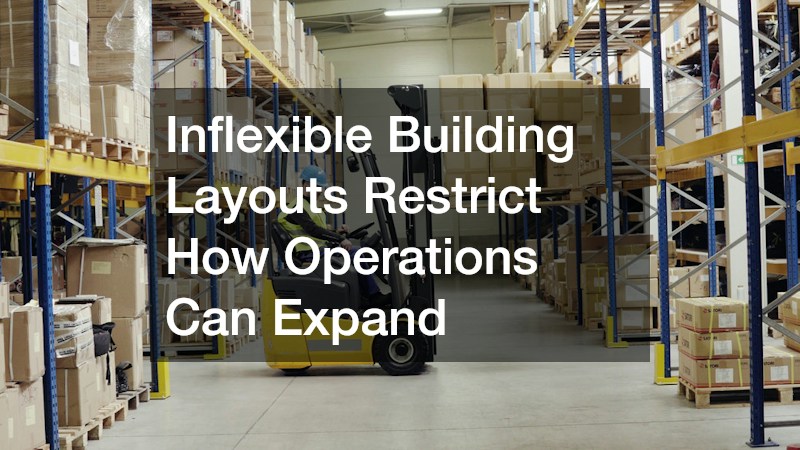
Traditional buildings with load-bearing interior columns and fixed room configurations are difficult and expensive to reconfigure as a business grows or pivots. A warehouse that can’t accommodate a new equipment layout, or a facility that can’t be reconfigured for a new product line, quietly caps what a business can pursue. Clear span buildings solve this problem by eliminating interior support columns, giving owners open, adaptable floor space that can be reconfigured as needs change.
This kind of flexibility matters most for businesses in seasonal industries, agriculture, logistics, or event services, where space needs shift throughout the year. Choosing adaptable construction upfront costs more initially but avoids the expensive renovation projects that rigid buildings eventually require.
Heating System Failures Interrupt Operations at the Worst Times
Climate control failures rarely happen at convenient times; they tend to show up during the coldest week of the year, exactly when a facility needs reliable heat the most. A breakdown that shuts down a warehouse, retail space, or office for even a day or two creates a ripple effect on productivity, customer experience, and staff morale. Scheduling routine furnace repair before winter’s peak demand hits helps avoid the worst-case scenario of a full system failure during business-critical hours.
Preventive maintenance costs a fraction of emergency repair, and it also extends the life of the overall system, delaying the need for a full replacement. Business owners who treat HVAC maintenance as a seasonal checklist item, rather than a reactive expense, avoid the costly disruptions that catch unprepared competitors off guard.
Structural Flooring Choices Affect Long-Term Building Capacity
The flooring and decking systems inside a commercial or industrial building affect far more than appearance; they determine how much weight a facility can safely support as operations scale up. Composite metal decking combines steel and concrete in a way that increases load capacity while reducing the overall material needed compared to older construction methods. Facilities built on outdated flooring systems often discover their capacity limits only when they try to add heavier equipment or additional storage racking.
Upgrading structural flooring during a renovation, rather than only when a load limit becomes an emergency, gives a business more flexibility to plan for growth. This is one of the least visible infrastructure decisions a company makes, yet it has one of the longest-lasting impacts on what the building can actually support.
The businesses that break through growth plateaus are rarely the ones with the flashiest marketing, they’re the ones that took a hard look at their physical infrastructure and fixed the quiet limitations holding them back. Start by walking through your own facility with fresh eyes, asking which systems are original equipment, which repairs keep recurring, and which spaces feel harder to work in every year. A clear-eyed infrastructure audit today can prevent a costly, disruptive failure tomorrow, and it puts growth decisions back in your control rather than leaving them to chance.