In almost every commercial operation, profit margins rarely disappear because of a single catastrophic event. Instead, they erode quietly through dozens of deferred decisions. A hairline crack near a loading dock collects water through winter, a minor oil seep on a work vehicle goes unlogged for three weeks, or a rusted exterior access door sticks until a storm floods an electrical room. Individually, each issue looks like a minor inconvenience that can wait until next quarter. Collectively, these neglected details compound into unscheduled downtime, emergency vendor markups, workplace injuries, and shortened equipment lifespans.
Modern business owners, operations directors, and facility managers cannot afford to treat rolling stock and physical real estate as disconnected budget silos. Your vehicles and your yard operate as a single, interdependent ecosystem. Rough ground conditions accelerate suspension wear and tire failures on your vehicles, while leaking or poorly staged vehicles degrade pavement surfaces and create safety hazards for every employee and visitor on site.
Building a resilient, profitable operation requires shifting away from reactive firefighting and toward disciplined, preventative asset stewardship. By standardizing mechanical inspections, pre-sourcing critical engine components, reinforcing high-traffic ground surfaces, protecting exterior structures, and planning major retrofits around smart financial timing, leadership teams can turn maintenance from an unpredictable cost center into a durable competitive advantage.
Standardize Preventative Inspections to Eliminate Roadside Breakdowns

The most expensive hour in any logistics or field-service business is the hour a loaded vehicle sits on the shoulder of a highway waiting for a tow. Reactive maintenance always carries a steep premium: emergency roadside dispatch fees, expedited shipping on replacement components, missed customer delivery windows, and idle payroll while drivers wait for a rescue unit. Eliminating those surprises begins with establishing non-negotiable daily and interval-based inspection routines before vehicles ever leave the yard.
Start by digitizing your Driver Vehicle Inspection Reports (DVIRs), so pre-trip and post-trip checks cannot be pencil-whipped in thirty seconds on a clipboard. Require timestamped photos of tire tread depth, brake chamber pushrod travel, fluid levels, and air line connections. When inspection logs feed directly into a centralized maintenance dashboard, shop supervisors spot developing patterns—such as recurring coolant loss or uneven steer-tire wear—weeks before a component fails under load.
To make preventative care sustainable across busy operational schedules, organize your fleet service intervals into a clear, tiered matrix:
- Level A Service (Every 5,000 to 7,500 Miles or 250 Engine Hours): Focus on lubrication, oil and filter changes, belt tension checks, battery load testing, and full fluid top-offs. Technicians should also inspect undercarriage seals and grease all chassis fittings to prevent premature joint wear.
- Level B Service (Every 15,000 to 20,000 Miles): Conduct deep brake lining measurements, wheel-end play inspections, air dryer cartridge replacements, and exhaust aftertreatment diagnostics to catch soot buildup or sensor drift early.
- Level C Service (Annual or 50,000+ Miles): Perform comprehensive transmission and differential fluid exchanges, cooling system pressure flushes, injector balance testing, and alignment checks across all axles.
Tailoring these intervals to actual duty cycles is especially critical for regional and long-haul freight hauling operations, where sustained highway speeds, steep grades, and maximum gross vehicle weights place relentless thermal and mechanical stress on drivetrains. A truck running heavy interstate corridors experiences vastly different wear patterns than a local delivery unit idling in urban traffic, so mileage alone should never be your sole trigger. Combine engine-hour tracking, idle-time percentages, and oil analysis reports to refine your service intervals.
Equally important is eliminating bottlenecks inside the shop. Whether you maintain an in-house bay or rely on outside vendors, establish clear service-level agreements and triage protocols for rapid truck repair. Dedicate one bay or priority vendor slot specifically for quick-turnaround diagnostics, sensor swaps, and lighting or air-brake fixes. Keeping minor issues out of the multi-day overhaul queue ensures revenue-generating rigs return to dispatch the same afternoon rather than sitting idle for a week over a two-hour fix.
Source Heavy-Duty Components and Precision Engine Work Before Peak Seasons
Even the best inspection schedule fails if your shop is stalled waiting on backordered components during your busiest quarter. Supply chain lead times for commercial drivetrain and diesel components continue to fluctuate, meaning proactive inventory management is now a core operational discipline rather than an afterthought. Operations managers should audit historical usage data twice a year and stock high-turnover wear items ahead of seasonal surges.
For fleets that rely on heavy-duty diesel pickups for field supervision, mobile service, or hotshot transport, maintaining a dedicated shelf of essential parts and accessories Duramax platforms depend on—such as OEM-grade fuel filters, high-pressure fuel line seals, glow plugs, EGR coolers, and heavy-duty front-end steering linkages—prevents minor faults from sidelining key support vehicles. Standardizing the model years and configurations of your utility pickups further simplifies parts stocking, reduces technician diagnostic time, and allows bulk purchasing discounts from trusted distributors.
When a high-hour commercial engine suffers internal wear or overheating, leadership teams also face a high-stakes financial decision: invest in a complete crate-engine replacement or pursue precision remanufacturing. In many cases, partnering with a reputable machine shop for specialized cylinder head machining restores full compression and thermal reliability at a fraction of the cost and lead time of a full engine swap.
Before approving major powertrain work, require your mechanical team or outside machine shop to follow a strict verification checklist:
- Magnaflux and Pressure Testing: Confirm the casting is completely free of invisible hairline cracks around valve seats and coolant passages before spending a dollar on labor.
- Deck Resurfacing to Exact Ra Specifications: Modern multi-layer steel head gaskets require mirror-smooth, mathematically flat mating surfaces to hold high cylinder pressures without weeping combustion gases into the cooling system.
- Valve Guide and Seat Restoration: Replacing worn guides and cutting multi-angle valve seats restores crisp airflow, improves fuel economy, and lowers exhaust gas temperatures under heavy towing loads.
- Injector Bore and Pre-Cup Inspection: Verify that injector sleeves and sealing surfaces are spotless and within factory tolerances to prevent fuel dilution in the crankcase.
Building relationships with vetted machine shops and parts suppliers before an emergency occurs gives your business priority scheduling when time matters most. Evaluate vendors annually using a simple scorecard tracking turnaround time, warranty support, dimensional accuracy, and core-return transparency.
Resurface High-Traffic Loading Zones to Reduce Vehicle Wear and Liability

Walk through many industrial yards, and you will see hundreds of thousands of dollars invested in modern equipment parked on failing ground surfaces. Facility managers frequently treat yard surfacing as a cosmetic expense, delaying repairs until potholes become craters. In reality, your yard surface is structural infrastructure that directly impacts vehicle maintenance costs, operational speed, and legal exposure.
Every time a loaded trailer drops into a deep rut or turns sharply across broken pavement, shock loads travel straight through tires, wheel bearings, air springs, and frame crossmembers. Over twelve months, deteriorating yard surfaces quietly generate thousands of dollars in avoidable alignment work, blown sidewalls, and cracked suspension brackets. Worse yet, standing water trapped in depressed asphalt seeps into the aggregate sub-base, freezing and expanding during cold snaps until entire sections of the lot heave and disintegrate.
When sections of your lot reach the end of their lifecycle, work with contractors experienced in industrial-grade commercial asphalt paving who understand axle-load engineering, proper sub-base compaction, and crowned drainage grading. Cutting corners on base thickness during paving saves money upfront but guarantees premature alligator cracking within two or three seasons.
Beyond mechanical wear, neglected pavement creates severe premises liability. Uneven transitions, crumbling curbs, unlit potholes, and black ice forming in poorly drained walkways put employees, third-party freight drivers, and visiting vendors at constant risk of serious injury. One severe ankle fracture or back injury on your property can trigger workers’ compensation spikes, OSHA scrutiny, and costly litigation. Maintaining documented monthly yard inspections, clear hazard markings, and prompt repair records ensures your business is never left scrambling to defend its safety practices against a slip and fall attorney following an avoidable fall on your premises.
Upgrade Structural Access Points and Protective Metal Finishes
The exterior envelope of your facility and the exposed steel infrastructure across your yard take a relentless beating from weather, road salt, forklift impacts, and industrial chemicals. Left unchecked, surface rust and failing perimeter seals allow moisture, pests, and unauthorized visitors into sensitive areas of your building while forcing premature replacement of expensive metal assets.
Start your exterior audit at ground level and below grade, where water intrusion causes the highest repair bills. Many commercial warehouses, workshops, and older industrial buildings rely on exterior cellar or mechanical-room entrances to house boilers, air compressors, and electrical switchgear. Over decades, steel doors warp, hinges seize, and perimeter gaskets rot away, turning basement access points into funnels for rainwater and winter drafts. Scheduling timely bulkhead door replacements with heavy-gauge, weather-sealed steel units protects critical utility rooms from flooding, improves building energy efficiency, and hardens your facility against break-ins.
While inspecting building access points, evaluate all other high-cycle openings—including overhead dock doors, weather seals, dock levelers, and perimeter security gates—to ensure tracks are aligned, springs are balanced, and safety photo-eyes function reliably.
Next, examine every exposed metal asset across your property and fleet. Standard liquid industrial paint looks acceptable for a year or two, but UV radiation, gravel impacts, hydraulic fluid spills, and winter de-icing salts quickly chip the finish and invite deep structural rust. When fabricating or refurbishing yard gates, safety bollards, perimeter fencing, structural stairways, or custom flatbed headache racks, partnering with an industrial powder coating company delivers vastly superior durability compared to traditional wet paint.
Treating exterior doors, barriers, and metal finishes on a structured five-year refresh cycle prevents the sudden capital shock of replacing corroded structural steel across your entire property at once.
Coordinate Heavy Lifts and Capital Deductions for Maximum ROI

Every growing industrial operation eventually faces major facility retrofits—replacing rooftop HVAC units, installing backup power generators, relocating heavy shop presses, or setting new bulk storage tanks. These high-consequence projects carry significant operational and financial risk if planned in isolation, yet they also present powerful opportunities to optimize after-tax cash flow when coordinated properly with your accounting team.
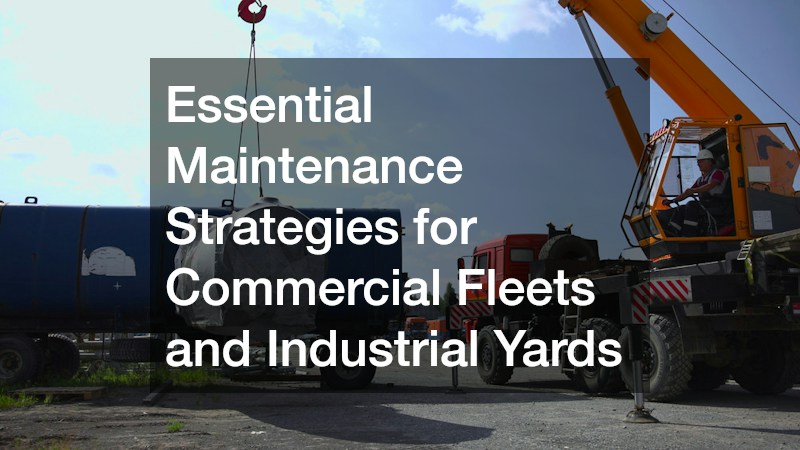
Heavy equipment installations leave zero margin for improvisation. Weeks before a major unit arrives on site, your operations lead should coordinate site logistics with a certified commercial crane service to verify rigging plans, overhead utility clearances, swing-radius exclusions, and ground-bearing pressure limits. Soft asphalt or hidden underground utility vaults can fail catastrophically under outrigger pads if soil conditions are not verified and reinforced with proper cribbing mats in advance.
Once your capital maintenance and facility upgrades are mapped out on the calendar, bring your commercial CPA into the conversation before signing purchase orders. Many business owners treat repairs, equipment upgrades, and facility improvements as purely operational headaches, missing substantial tax strategies that directly fund ongoing asset modernization.
Depending on your entity structure, asset classifications, and placed-in-service dates, major capital investments—including heavy work vehicles, shop machinery, and qualifying site infrastructure—may qualify for accelerated depreciation under Section 179 or bonus depreciation rules. Furthermore, if your company operates directly within the energy sector or provides specialized logistics, fabrication, and field support to upstream and midstream producers, proactive tax planning around oil and gas tax deductions—alongside eligible equipment write-offs and intangible cost provisions—can significantly reduce taxable income and free up working capital for next year’s maintenance budget.
Always maintain meticulous documentation separating routine preventative repairs (which are generally deductible as current-year operating expenses) from capital improvements that extend asset life or adapt property to new uses. Clean, itemized invoices from your mechanics, paving contractors, fabricators, and rigging providers make year-end tax preparation seamless and audit-ready.
Building a Culture of Operational Discipline

True operational excellence is rarely flashy. It lives in the quiet consistency of daily vehicle walk-arounds, organized parts shelves, well-drained loading aprons, weather-tight doors, and disciplined financial planning. When business owners treat maintenance as a strategic priority rather than a reluctant expense, every part of the organization benefits: drivers operate safer and more reliable equipment, mechanics spend their hours preventing failures instead of scrambling through emergencies, customers receive consistent on-time service, and profit margins stay protected against preventable surprises.