Business liability can arise from many sources, including employee injuries, unsafe property conditions, equipment accidents, environmental hazards, improper waste handling, and legal disputes. For business owners, reducing these risks requires more than purchasing insurance or responding to problems after they happen. A proactive approach to workplace and facility management can help prevent accidents, strengthen compliance, protect employees and customers, and reduce the likelihood of costly claims.
Effective risk management starts with understanding where liability can develop. Every business has different exposures depending on its industry, property, workforce, equipment, and operations. However, most companies can reduce risk by maintaining safe facilities, documenting procedures, working with qualified professionals, and addressing hazards before they become emergencies.
Create a Culture of Workplace Safety
Employee safety should be one of the first priorities in any liability-reduction strategy. Workplace injuries can lead to lost productivity, insurance claims, regulatory scrutiny, and legal disputes. Even minor incidents can become expensive if businesses lack proper training, documentation, or safety procedures.
Employers should establish clear safety policies and make sure employees understand how to report hazards and injuries. Regular training can help workers recognize unsafe conditions before accidents occur. Depending on the type of business, training may cover lifting procedures, equipment operation, emergency response, chemical handling, personal protective equipment, or workplace ergonomics.
It is also important to document safety meetings, inspections, training sessions, and incident reports. Good documentation can demonstrate that a company has made reasonable efforts to maintain a safe working environment.
When an employee injury results in a complicated claim or dispute, consulting a workers compensation lawyer may help a business understand its responsibilities and navigate applicable legal requirements. Legal guidance can be especially valuable when there are questions about coverage, documentation, employee classifications, or disputed workplace injuries.
Keep Floors and Walking Surfaces Safe
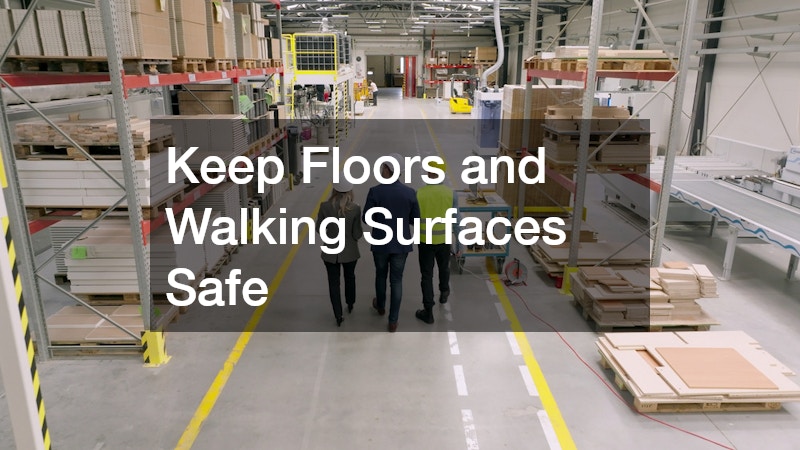
Slips, trips, and falls are common sources of workplace and premises liability. Damaged floors, slippery surfaces, uneven transitions, and poorly maintained walkways can create risks for employees, customers, vendors, and visitors.
Businesses should inspect high-traffic areas regularly and address damage as soon as possible. Cleaning procedures should include clear protocols for wet floors, spills, and debris. Entryways may require additional attention during rain or snow because moisture can make surfaces more hazardous.
In warehouses, garages, manufacturing facilities, and other commercial spaces, durable flooring can also support safer operations. A professional concrete floor coating may improve durability, visibility, resistance to chemicals, and ease of maintenance, depending on the environment. Businesses should select flooring materials based on traffic, equipment use, moisture exposure, and workplace conditions.
Lighting is another important consideration. Even well-maintained floors can become hazardous if employees or customers cannot clearly see changes in elevation, obstacles, or damaged areas.
Maintain Outdoor Areas Before Problems Develop
Liability does not stop at the front door. Parking lots, sidewalks, landscaping, curbs, loading zones, and other exterior areas can create significant risks if they are neglected.
Businesses should perform routine inspections of exterior surfaces and look for potholes, cracks, faded markings, drainage issues, loose materials, and uneven pavement. Scheduling parking lot maintenance can help address problems before they contribute to vehicle damage, pedestrian injuries, accessibility concerns, or more expensive repairs.
Property owners should also pay attention to landscaping. Dead branches, leaning trees, damaged roots, and overgrown vegetation can create risks during storms or high winds. A qualified tree removal service may be necessary when trees are diseased, unstable, interfering with structures, or creating hazards near pedestrian and vehicle areas.
Exterior maintenance records can also be valuable. Keeping a log of inspections, repairs, contractor visits, and reported hazards shows that the business is actively managing its property rather than ignoring known risks.
Manage Waste Responsibly
Commercial waste can create safety, environmental, and regulatory concerns. Overflowing containers, sharp objects, construction debris, food waste, and hazardous materials may increase the risk of injury or contamination.
Businesses should create procedures for separating, storing, and disposing of waste. Employees should know which materials belong in standard trash containers and which require specialized handling.
Companies that generate large amounts of ordinary commercial or construction waste may benefit from working with local dumpster services. Having appropriately sized containers and a reliable pickup schedule can help prevent debris from accumulating in work areas, loading zones, or customer-facing spaces.
Waste containers should be placed in accessible locations that do not block emergency exits, fire lanes, walkways, or visibility. Businesses should also consider whether containers need covers, locks, or barriers to prevent unauthorized access.
Proper waste management is not simply a housekeeping issue. It can reduce fire hazards, prevent injuries, improve sanitation, and demonstrate responsible facility management.
Prepare for Hazardous Incidents
Some workplace incidents require specialized cleanup. Blood, bodily fluids, infectious materials, chemical contamination, and other hazardous substances may pose serious health and safety risks if handled incorrectly.
Businesses should establish procedures for responding to these situations before an emergency occurs. Employees need to know when an area should be isolated, who should be contacted, and when professional cleanup is required.
A qualified biohazard cleanup company can provide specialized services for situations involving potentially dangerous biological materials. These professionals typically use appropriate protective equipment, containment procedures, cleaning methods, and disposal practices designed for hazardous environments.
Attempting to handle significant contamination without proper training can expose employees to unnecessary risk and potentially create additional liability. Businesses should identify emergency service providers in advance so that they are not searching for help during a crisis.
Emergency plans should also include communication procedures. Employees, managers, property owners, and potentially customers may need clear instructions depending on the severity of the incident.
Protect Confidential Business Information
Facility management also includes information security. Businesses routinely store sensitive documents containing employee records, customer information, financial details, medical information, contracts, and proprietary data.
Improper disposal of these materials can create privacy concerns and increase the risk of identity theft or unauthorized disclosure. Simply placing sensitive paperwork in standard recycling bins may not provide adequate protection.
Working with document shredding companies can help businesses establish a secure process for destroying confidential records. Scheduled shredding services, locked collection containers, and documented destruction procedures can be useful for organizations that regularly handle sensitive information.
Businesses should also develop a records retention policy. Not every document should be destroyed immediately, and some records may need to be retained for legal, tax, employment, or regulatory purposes.
A clear system for creating, storing, retaining, and disposing of records can reduce both security risks and administrative confusion.
Use Equipment With Safety in Mind
Equipment-related accidents can result in serious injuries and significant liability. Forklifts, lifts, loaders, and other machinery require proper training, maintenance, and supervision.
Businesses should make sure only authorized employees operate specialized equipment. Training records should be kept current, and equipment should be inspected before use. Any mechanical problem should be reported and addressed promptly.
Companies that do not use certain equipment frequently may choose forklift rental rather than purchasing machinery. Rental equipment should still be evaluated carefully. Businesses should confirm that the equipment is appropriate for the task, understand its load capacity, review operating instructions, and follow all applicable safety requirements.
The work environment matters as well. Narrow aisles, cluttered floors, poor visibility, steep grades, and pedestrian traffic can increase the risk of equipment accidents. Facility layouts should be designed to reduce unnecessary conflicts between machinery and people.
Clear signage, designated travel lanes, mirrors, barriers, and restricted areas can all support safer operations.
Understand Property Boundaries and Site Conditions
Property disputes can become expensive, especially when businesses expand, install fences, build additions, change parking areas, or modify access points.
Before making significant improvements, property owners should understand boundaries, easements, rights-of-way, and other site conditions. Uncertainty about property lines can lead to disputes with neighboring owners, municipalities, contractors, or utility providers.
Working with established land survey companies can help property owners obtain accurate information about boundaries and site features. Surveys may be useful before purchasing commercial property, beginning construction, installing major improvements, or resolving questions about ownership lines.
Site planning should also take drainage, accessibility, emergency access, utility locations, and neighboring properties into account. A project that appears straightforward may create liability if it interferes with easements, creates runoff problems, or limits safe access.
Careful planning before construction or property modification can prevent disputes that are much harder to solve after work is completed.
Build Preventive Maintenance Into Daily Operations
Preventive maintenance is one of the most effective ways to reduce facility-related liability. Many accidents occur because small problems are allowed to grow.
A leaking pipe may create a slip hazard. A loose railing may eventually fail. Poor lighting can make stairs dangerous. A damaged door may prevent proper security. Cracked pavement can become a trip hazard. HVAC issues can affect indoor conditions and employee comfort.
Rather than waiting for employees or customers to complain, businesses should use scheduled inspections. Maintenance checklists can cover interior areas, exterior areas, equipment, fire protection systems, emergency exits, lighting, plumbing, electrical components, security systems, and accessibility features.
Problems should be prioritized based on risk. Conditions that could cause injury or interfere with emergency response should generally receive immediate attention.
Businesses should also document repairs. Maintenance records can help managers track recurring problems, plan budgets, evaluate contractors, and demonstrate that hazards were addressed.
Work With Qualified Professionals

Business owners often rely on outside contractors for maintenance, construction, legal guidance, equipment, waste disposal, cleanup, and other specialized services. Choosing qualified vendors is an important part of liability management.
Before hiring a contractor, businesses should confirm licensing requirements, insurance coverage, experience, references, and scope of work. Contracts should clearly describe responsibilities, deadlines, pricing, warranties, and insurance expectations.
For legal matters involving contracts, business structure, disputes, employment concerns, property issues, or regulatory obligations, a business attorney can help owners understand potential risks and make informed decisions.
Legal review may also be helpful before entering significant vendor agreements, leasing commercial property, expanding operations, or making changes that affect employees or customers.
The goal is not to involve legal counsel in every routine decision. Instead, businesses should recognize situations where professional advice can prevent larger problems.
Review Insurance and Risk Transfer Strategies
Insurance remains an important component of business liability management, but coverage should be reviewed regularly. A policy that was appropriate when a company started may no longer match its current operations.
Businesses may need different forms of coverage depending on their industry and risk profile, including general liability, commercial property, workers’ compensation, professional liability, cyber coverage, commercial auto, or umbrella insurance.
Owners should inform insurance providers when operations change. Adding new equipment, expanding services, hiring more employees, moving locations, or modifying property use may affect coverage needs.
Contracts with vendors and subcontractors should also address insurance responsibilities. Businesses may require contractors to provide certificates of insurance or meet certain coverage requirements before work begins.
Insurance cannot prevent accidents, but it can reduce financial exposure when unexpected events occur.
Train Employees to Identify and Report Hazards
Managers cannot see every problem as soon as it develops. Employees are often the first people to notice damaged equipment, slippery floors, security issues, leaks, blocked exits, or unsafe behavior.
Companies should create simple reporting procedures so employees know how to communicate concerns. Reporting systems should not be unnecessarily complicated. Employees are more likely to report hazards when they know whom to contact and believe concerns will be addressed.
Managers should respond promptly and document the action taken. If a repair cannot be completed immediately, temporary controls may be necessary, such as barriers, signage, restricted access, or equipment shutdowns.
A strong reporting culture can help businesses identify risks earlier and reduce the chance that known hazards are ignored.
Keep Emergency Plans Current
Emergency planning is another important element of workplace and facility management. Fires, severe weather, medical emergencies, power failures, security threats, equipment accidents, and hazardous spills can happen with little warning.
Businesses should maintain written procedures that explain how employees should respond. Emergency exits should remain accessible, evacuation routes should be clearly marked, and employees should know where to gather after leaving the building.
Contact information for emergency services, property managers, utility providers, insurance representatives, and specialized contractors should be readily available.
Emergency plans should be reviewed whenever the facility layout, staffing, equipment, or operations change. Periodic drills can also help identify weaknesses before a real emergency occurs.
Make Risk Management an Ongoing Process
Reducing business liability is not a one-time project. Workplace conditions change, equipment ages, employees come and go, regulations evolve, and properties require ongoing maintenance.
Businesses should review their risk management practices periodically and update procedures when new issues arise. A useful review may include workplace safety, employee training, equipment condition, waste disposal, records management, exterior property conditions, emergency planning, insurance coverage, and vendor relationships.
Facility management and business compliance are closely connected. A company that maintains safe property, trains employees, documents procedures, uses qualified service providers, and responds quickly to hazards is in a stronger position to prevent injuries and disputes.
No business can eliminate every possible risk. However, consistent workplace and facility management can reduce avoidable hazards and create a safer, more organized environment. By treating safety, maintenance, legal oversight, records security, equipment management, and property care as ongoing responsibilities, business owners can protect their employees, customers, assets, and long-term operations.