Growing a company feels like winning, right up until an overlooked risk turns into a bill nobody budgeted for. Expansion brings more employees, more equipment, more property, and more interactions with the public, and each of those adds a new layer of exposure. Many business owners discover the real cost of liability only after an incident forces them to deal with lawyers, contractors, and insurance adjusters all at once. Understanding where these hidden costs tend to hide can help you prepare before a single bad day turns into a lasting financial setback.

Vehicle Fleets and On the Road Risk
Once a company adds delivery vans, service trucks, or sales vehicles to its operations, it inherits a whole new category of liability that many owners underestimate. A single collision involving a company vehicle can trigger medical bills, property damage claims, and lost income for everyone involved, and those costs rarely stay small. Businesses that operate even a modest fleet should budget for the reality that a car accident involving an employee can lead to a lawsuit naming the company directly, not just the driver.
Insurance alone often does not cover the full scope of what follows a serious crash, especially when injuries are severe or liability is disputed. Companies that fail to plan for this gap frequently find themselves scrambling to hire outside counsel after the fact instead of having a response plan ready in advance.
- Review commercial auto policy limits annually as your fleet grows
- Keep detailed maintenance records to counter negligence claims
- Train drivers on defensive driving and incident reporting procedures
- Understand that personal auto coverage rarely extends to business use
Commercial Vehicle Collisions Involving Heavy Equipment
Companies that rely on large trucks for hauling materials or making deliveries face a different scale of risk than those with standard passenger vehicles. When a collision involves a loaded commercial truck, the damages tend to be larger, the injuries more severe, and the legal scrutiny far more intense. It is common for businesses in this situation to need a trucking accident attorney who understands federal transportation regulations, driver log requirements, and cargo weight restrictions.
The financial exposure here extends beyond the crash itself. Regulatory fines, driver qualification disputes, and vehicle inspection failures can all surface during an investigation, adding costs that were never part of the original budget. Growing companies that add even one heavy truck to their operations should treat that addition as a meaningful shift in their overall risk profile.
- Maintain current DOT compliance records for every commercial driver
- Schedule regular inspections beyond the legal minimum
- Keep cargo securement logs for every haul
- Review insurance coverage limits specific to commercial trucking
Construction Site Injuries and Equipment Rentals
Businesses that expand into construction, renovation, or site development often rent heavy machinery rather than purchasing it outright, and this introduces liability questions many owners have not considered. When a company arranges an excavator rental for a project, the rental agreement typically outlines who bears responsibility if the equipment causes injury or property damage during use. Reading that fine print carefully before signing can prevent a costly dispute later.
Operator training matters just as much as the contract terms. An improperly trained employee operating rented machinery can cause an accident that exposes the company to both the injured party’s claims and the rental company’s demands for equipment damage. Growing businesses should treat every piece of rented heavy equipment as a liability decision, not just a logistics one.
- Confirm who holds insurance responsibility during the rental period
- Require documented operator training before equipment use
- Inspect equipment condition before and after rental
- Clarify liability terms for third party injuries on site
Demolition and Structural Work Exposure
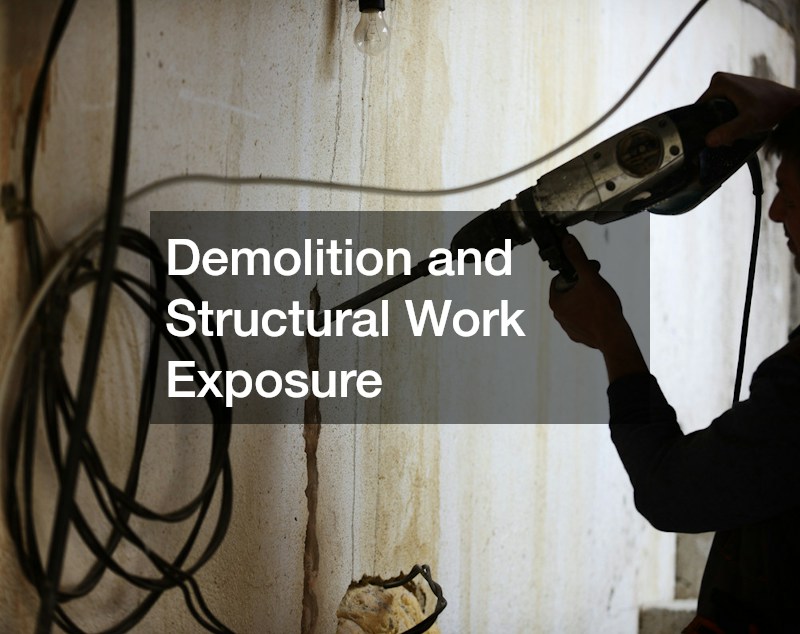
Companies expanding their physical footprint sometimes need to tear down old structures before building new ones, and demolition work carries some of the highest liability stakes in the construction world. Hiring experienced demolition contractors with proper licensing and insurance is not just a quality decision, it is a financial safeguard. A poorly managed demolition can lead to structural collapse, utility damage, or injuries to nearby workers and bystanders, each of which can produce claims far exceeding the cost of the original job.
Permits and inspections add another layer of protection that growing companies sometimes try to skip in the name of speed. Skipping these steps might save a few days upfront, but it dramatically increases the odds of a dispute if something goes wrong. A company that documents every stage of a demolition project is in a far stronger position if a claim ever arises.
- Verify contractor licensing and insurance before work begins
- Confirm all required permits are filed and approved
- Document site conditions before and after demolition
- Require a written safety plan for work near occupied buildings
Workplace Property Damage From Utility Failures
As companies grow, they often take on larger facilities with aging infrastructure, and that infrastructure does not always hold up under increased demand. Septic systems are a common example, especially for businesses operating in areas without municipal sewer access. Scheduling regular commercial septic services can prevent the kind of system failure that leads to property damage, health code violations, and expensive emergency repairs.
A neglected septic system does not just create an unpleasant mess, it can trigger liability claims from employees, customers, or neighboring properties affected by overflow or contamination. Routine maintenance is far less expensive than dealing with the aftermath of a system failure that disrupts operations for days or weeks. Growing companies should treat infrastructure upkeep as part of their liability management, not just facilities maintenance.
- Schedule inspections on a consistent annual or biannual basis
- Keep maintenance records in case of future disputes
- Address slow drainage issues before they become overflows
- Train staff to recognize early warning signs of system trouble
Material Delivery Errors on Active Job Sites
Construction and development projects depend on accurate material delivery, and errors in this process can create liability issues that catch growing companies by surprise. When a project calls for metered concrete, precise measurement matters because an incorrect pour can compromise structural integrity or require costly rework. Companies that rely on suppliers with poor quality control processes are effectively inheriting that supplier’s risk.
Disputes over delivery accuracy can also delay projects, and delays themselves carry financial consequences through penalty clauses or lost contracts. Vetting suppliers before committing to a long term relationship protects against both the immediate safety risk and the downstream business risk. A growing company’s liability exposure is only as strong as its weakest vendor relationship.
- Request documentation of mixing and measurement accuracy
- Confirm delivery timing aligns with project scheduling needs
- Ask about supplier insurance coverage for delivery errors
- Review contracts for remedies if materials fail to meet specifications
Customer Injury Claims After an Incident
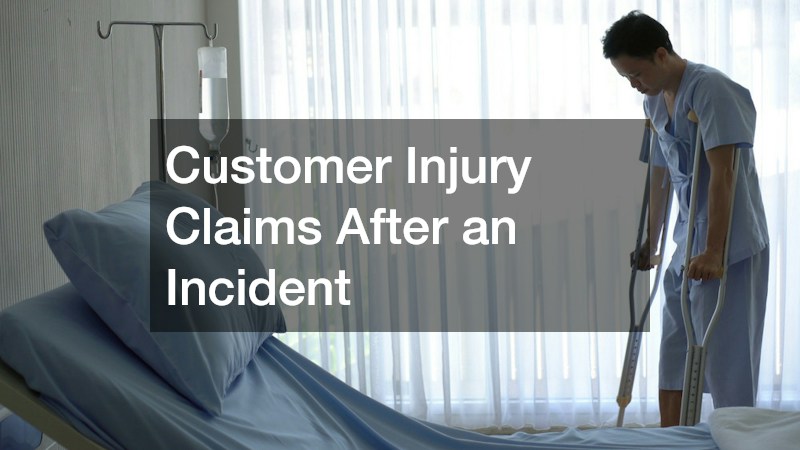
When a customer or visitor is injured on company property or because of a company vehicle, the business needs to understand how these claims typically unfold. A slip-and-fall in a retail store, a delivery driver’s fender-bender, or a customer hurt by malfunctioning equipment can all trigger claims that grow far more expensive than owners initially expect, especially once medical bills, lost wages, and pain-and-suffering damages are added together. Personal injury lawyers representing the injured party will look closely at whether the company followed basic safety standards, maintained its property, and responded appropriately after the incident. They’ll ask for maintenance logs, inspection records, surveillance footage, and employee statements to establish whether the business knew about a hazard and failed to fix it in a reasonable timeframe.
Even minor gaps — a torn carpet that went unreported for weeks, a wet floor sign that was missing, a driver without a current license check — can become the centerpiece of a claim. Companies should also be aware that liability can extend beyond their own employees to contractors or temporary staff working on-site, which often surprises growing businesses juggling multiple vendors. Companies that document incidents thoroughly and communicate carefully put themselves in a much stronger position if a claim moves forward. That means filling out an incident report the same day, photographing the scene, collecting witness contact information, and routing all follow-up communication through a manager or insurer rather than letting frontline staff speculate about fault.
Separately, companies whose work involves vehicles on public roads should understand how fault gets evaluated after a crash. A single delivery van or sales fleet can expose a growing business to significant risk, especially once mileage and driver count start climbing. Insurers and courts typically look at driver behavior, vehicle maintenance records, and dispatch or scheduling practices to determine who bears responsibility. Car accident lawyers representing an injured party will also dig into whether the company conducted proper background checks before hiring a driver, and whether maintenance logs show regular inspections rather than reactive repairs. Gaps in these records can shift liability toward the business even when the driver’s actions were only partly at fault.
Telematics data, dashcam footage, and GPS logs have become standard evidence in these disputes, so companies without that documentation are often at a disadvantage. How quickly and thoroughly a company responds after a crash also factors heavily into the outcome. A car accident involving a company vehicle should trigger an immediate, documented response: securing the scene, gathering witness information, and notifying insurers within hours rather than days. Growing businesses benefit from having a clear incident response protocol in place, rather than improvising after something happens and risking costly missteps in those first critical hours.
- Train staff on proper incident documentation procedures, including standardized forms that capture date, time, location, and conditions
- Take photos and gather witness information immediately, before the scene changes or memories fade
- Record the injured party’s own account in their words, without paraphrasing or suggesting conclusions
- Report incidents to insurance carriers promptly — most policies require notice within 24 to 48 hours to preserve coverage
- Preserve any physical evidence, such as a wet floor sign, damaged equipment, or surveillance footage, before it’s discarded or overwritten
- Avoid admitting fault before a full investigation is complete, since even casual sympathetic remarks can be used against you later
- Designate one trained point person to handle all communication with the injured party to keep messaging consistent
Choosing Legal Representation Before You Need It
Many growing companies wait until a crisis hits to start looking for legal help, and that delay often costs them leverage in negotiations. Scrambling to vet attorneys while a lawsuit clock is already ticking means accepting whoever has availability rather than whoever has the right expertise, and that mismatch shows up later in settlement amounts and case timelines. Researching options in advance, including identifying what qualities make up the best personal injury lawyer for your industry, gives a company a head start if litigation ever becomes necessary.
For a manufacturer, that might mean someone who has handled product liability claims involving machinery or equipment failure. For a retail or hospitality business, premises liability experience and familiarity with slip-and-fall defense strategy matters far more. Experience with businesses of similar size and risk profile matters more than general reputation alone. A firm that typically represents large corporations may not prioritize a 30-person company the same way a mid-sized practice would, and fee structures should be discussed upfront rather than discovered mid-case. It also helps to ask prospective counsel a few concrete questions before you need them: How many similar cases have they tried versus settled? What’s their average case timeline? Can they provide references from businesses in your sector? Having these answers on file, along with a signed engagement letter ready to activate, can shave weeks off response time when an incident actually occurs.

Growing companies often wait until a lawsuit lands on their desk before thinking seriously about legal counsel, but by then the clock is already working against them. A car accident attorney who regularly handles commercial liability cases will understand nuances that a general practice attorney might miss, such as how fleet insurance policies interact with third party claims, how uninsured motorist coverage applies when a delivery driver is at fault, or how state-specific comparative negligence rules can shift the percentage of damages your company ultimately owes. These details matter more than most business owners realize. A single car accident involving a company vehicle can trigger overlapping claims from the other driver, their passengers, and even their insurer — each with different timelines and documentation requirements.
Missing a filing deadline or misunderstanding a policy exclusion by even a few days can turn a manageable five-figure settlement into a six-figure judgment. Building a relationship with legal counsel before an incident occurs means faster response times and better outcomes when it matters most. Many firms offer retainer arrangements specifically for growing businesses, which guarantee a response within hours rather than days and include periodic policy reviews to catch coverage gaps before they become liabilities. Some will also conduct a one-time audit of your current insurance and driver policies for a flat fee, often under $1,000, which is a fraction of what a single contested claim can cost in legal fees alone. This kind of preparation is inexpensive compared to the cost of scrambling during an active claim. Companies that wait until they’re served with papers typically pay a premium for rushed representation, and they lose the negotiating leverage that comes from having counsel already familiar with their operations, fleet, and risk profile.
- Research attorneys with specific commercial liability experience, not just general business law backgrounds
- Ask about experience handling cases similar to your industry, including outcomes and settlement ranges
- Check for board certifications or specialty bar sections in commercial litigation
- Establish a relationship before a claim ever arises, even if it’s just an initial consultation and retainer agreement
- Request a sample fee structure upfront, whether hourly, flat-rate, or contingency, so costs aren’t a surprise during a crisis
- Keep contact information accessible to managers and supervisors, not just ownership or HR
- Review the relationship annually as your company grows, since your risk profile and legal needs will shift over time
Hidden liability costs rarely announce themselves until a company is already dealing with the fallout, which is exactly why proactive planning matters so much. Reviewing vehicle policies, vetting contractors and suppliers, maintaining infrastructure, and lining up experienced legal counsel are all steps that cost far less than reacting after an incident occurs. Take time this quarter to audit your company’s exposure across these areas rather than waiting for a claim to force the conversation. The businesses that handle growth well are usually the ones that prepared for its risks long before they appeared.